

Real estate has always been a people business, but software is what keeps things moving behind the scenes. According to the NAR: 2025 Member Profile report, almost all agents use digital platforms to speed up tasks such as document preparation, contact management, listings, and social media management. The best tools for real estate agents help them stay organized and competitive. In this post, we’ll discuss 5 software solutions every real estate professional should try.
Top 5 software solutions for real estate professionals
To keep this list genuinely useful, we didn’t just grab the biggest names or the flashiest features. Each option below is “best for” a specific job, so you can mix and match without paying twice for the same functionality or overcomplicating your tech stack.
1. Content Snare: Best for secure client onboarding and document collection

Content Snare is the right software if paperwork is the part of the job you’d happily hand off. What sets Content Snare apart is how much it removes the chasing: you send clients a branded request, they see exactly what’s outstanding, and automatic reminders follow up for you with no awkward nudges required.
Real estate agents can use it to customize questionnaires for buyers, sellers, or landlords, and reuse ready-made templates across listings and transactions. Other features that make Content Snare one of the best tools for real estate agents include:
- Advanced fields like ID verification and signatures
- Discussions directly within forms to assist your clients if they get stuck
- Third-party integrations to help you connect Content Snare with other tools
- Approvals and rejections
- AI form builder based on your prompts or file uploads
Security is another big win, particularly when you’re handling clients’ personal and financial information. Content Snare uses military-grade encryption and is ISO 27001 certified, which matters when clients are trusting you with contracts and confidential documents.
Content Snare has been around since 2016, with more than 1,600 businesses using it all over the world. Firms and professionals who use it spend 71% less time gathering information, see a 77% reduction in data collection costs, and experience 67% fewer stalled projects.
Sounds tempting?
Start a 14-day Content Snare trial and see how much time you can save by letting your paperwork run itself.
2. Real Geeks: Best for listing management with built-in lead capture
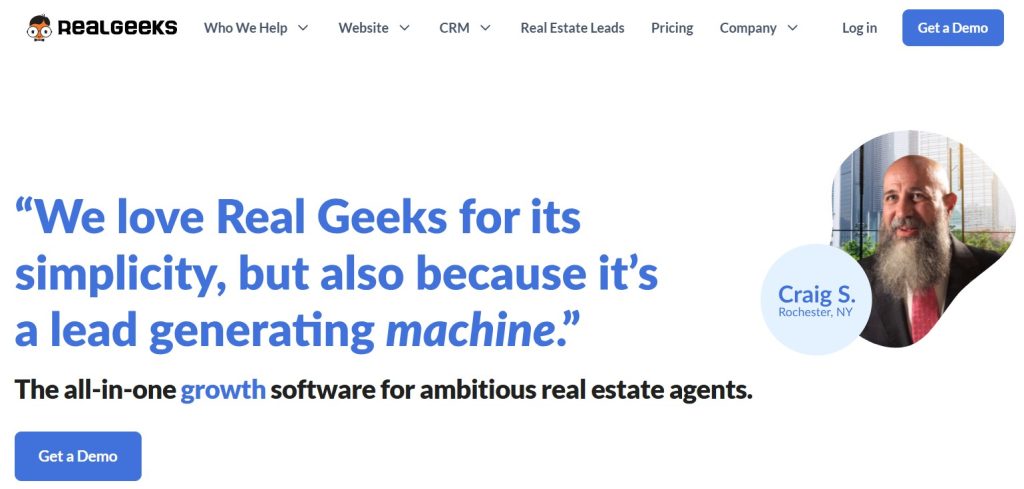
Real Geeks is a solid option for agents who want their listings and lead generation working together, rather than living in separate tools. One of the biggest strengths is its IDX-powered website and custom-branded property search, which makes it easy for prospects to explore listings and stay engaged. It also offers the following features:
- Property alerts
- Automated email and SMS drip workflows
- Built-in market reports
- Valuation tools
All of these features help keep buyers and sellers coming back, while quietly capturing lead data in the background. From an agent’s point of view, this means fewer cold starts and more inbound enquiries tied directly to active listings. Overall, Real Geeks works best for real estate agents who want a single platform to showcase listings, capture buyer interest, and nurture leads.
3. Follow Up Boss: Best for managing real estate leads and client relationships
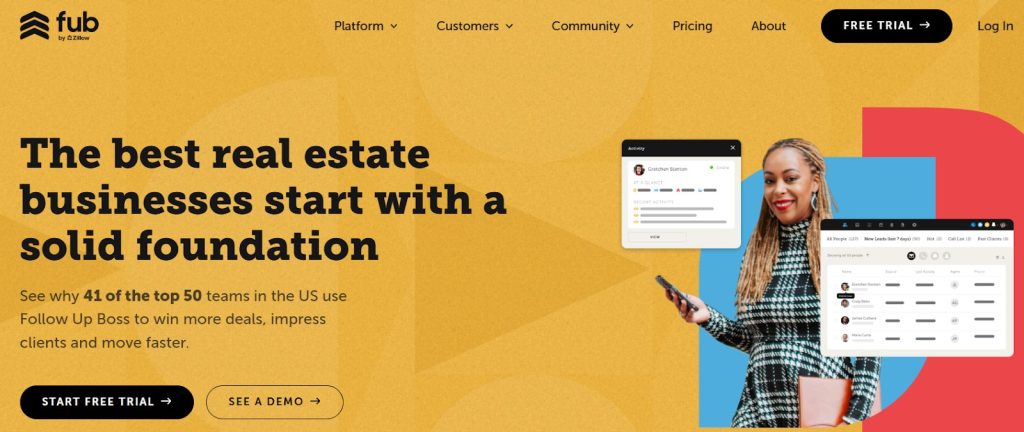
Follow Up Boss is built specifically for busy agents and teams that need to respond fast and keep relationships warm from first enquiry to closing (and beyond). At its core, Follow Up Boss pulls leads in from multiple sources and websites, and then enables you to quickly prioritize them using smart lists and clear pipelines. Agents can communicate directly from the platform using call, text, and email while syncing calendars and inboxes. Key Follow Up Boss features include:
- Lead capture from any source or website
- Automated follow-up plans and reminders
- Built-in calling, texting, and email
- Reporting on lead sources and agent activity
- Mobile app for managing leads on the go
The bottom line is that Follow Up Boss is best suited for real estate professionals who want a reliable CRM that helps them stay responsive and consistent without overcomplicating day-to-day client comms.
4. HubSpot CRM: Best for scalable contact and marketing automation
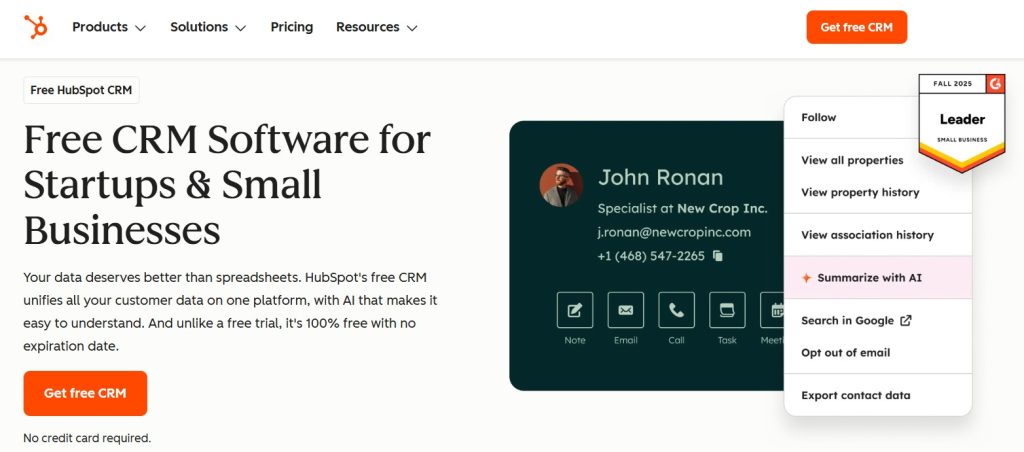
HubSpot CRM isn’t made exclusively for real estate, but its strength lies in how well it handles contacts, communication, and automation at scale. This platform gives agents a place to store contacts and track conversations with email, forms, and landing pages built in. You can use it to automate follow-ups and trigger emails based on actions like form submissions or listing enquiries. It provides a broad scope of features, but we’ll point out the following:
- Contact and deal management
- Email tracking and marketing automation
- Forms and landing pages for lead capture
- Pipeline visibility and task reminders
- Reporting on engagement and campaign performance
Though it’s not your average real estate tool, HubSpot CRM works well for real estate professionals who want a CRM that can grow with their database and don’t mind tailoring a more general platform to fit their real estate workflow.
5. Dotloop: Best for transaction and deal coordination
Dotloop is focused on the part of the job where details matter and deadlines don’t wait. Once a deal is in motion, it gives real estate agents a simple system to manage contracts and other tasks without bouncing between multiple sources of information. Agents can run unlimited transactions, edit documents directly in the platform, and send out legally binding eSignatures with a full audit trail. Some of our favorite features include:
- Easy-offer links
- Secure eSignatures with audit trails
- Document and clause management
- Task templates for transaction steps
- MLS and association feeds
- Mobile app and document scanning
Dotloop is very useful for real estate agents who want tight control over transactions and fewer last-minute surprises before closing.
Turn better real estate software into better results
The software you choose won’t replace good agents, but it will remove the friction that slows them down and allow them to build relationships and close deals with confidence. If you’re reviewing your tech stack this year, focus on the best tools for real estate agents because they can genuinely improve your business.
FAQ
What tools does a real estate agent need?
At a minimum, most agents need tools to manage client onboarding, contact management, marketing, listings, and transactions. The goal is to cover the basics without wasting time, so you can minimize follow-ups and cut down on mistakes.
Can Content Snare improve real estate client onboarding?
Yes, and that’s exactly what it’s built for. Content Snare helps agents collect documents and client details in one secure place, with automatic reminders so clients actually respond. It practically eliminates paperwork-chasing because it keeps everything organized in one central system.
What are the best free tools for real estate professionals?
Some of the best free tools for real estate professionals include basic CRM plans, email tools like Gmail, and design tools such as Canva. However, free plans often come with limits on automation, security, or support. They’re fine for testing the waters, but most agents eventually upgrade once their workflow (and client expectations) grow.
Deixe um comentário